
The Five Minute Chart That Prints Three Times a Week in New York
Every morning at 9:30am EST roughly four million retail traders open a futures chart.

Most of them lose money that day.
Not because the market tricked them. Not because the algos hunted their stops. Not because they picked the wrong contract or the wrong broker or the wrong session.
Because they sat down with no idea which direction they were supposed to be trading.
They just started looking for trades.
You have done this. Everyone has done this. You open the five minute chart, you see a big green candle, something in your chest fires, and before the next candle closes you are in a position you cannot fully explain to anyone who asks why.
Twenty minutes later you are flat, slightly poorer, and telling yourself the next one will be different.
It will not be different. Not until the process changes.
The contrarian truth about intraday futures
Most people who lose money trading ES and MES believe they need a better entry signal.
A more sophisticated indicator. A smarter oscillator. A proprietary tool that tells them exactly when price is about to move.
That belief is exactly wrong.
The traders who consistently pull money out of the NY session every week are not using more tools. They are using fewer. Four to be specific.
And the most important work they do happens before the market opens. Before the first candle of the day prints. Before they have touched a single order.
They check one thing on the daily chart and it takes ten seconds.
The problem is not your entries. It is your context.
Here is what is actually happening when a retail trader loses money on a clean looking five minute setup.
They are right about the candle. They are wrong about the direction.
They see a textbook bullish signal on the five minute chart and they buy. What they do not see is that on the daily timeframe price has been in a downtrend for three days and every bounce has been sold into. The five minute setup they acted on was a relief rally in a bearish structure. Institutions were selling into their buy.
The signal was real. The context was wrong.
Switching to the five minute chart without checking the daily first is like walking into a meeting without knowing what the meeting is about. You can say the right words and still end up on the wrong side of the decision.
This happens to funded traders. It happens to traders with six months of experience and traders with six years. The five minute chart is seductive. It moves constantly. It creates the illusion of opportunity every few minutes. And it punishes context-blind traders every single session without exception.
The fix is not complicated. But it requires doing something most retail traders refuse to do.
Check the daily chart before you trade. Every single day. Without exception.
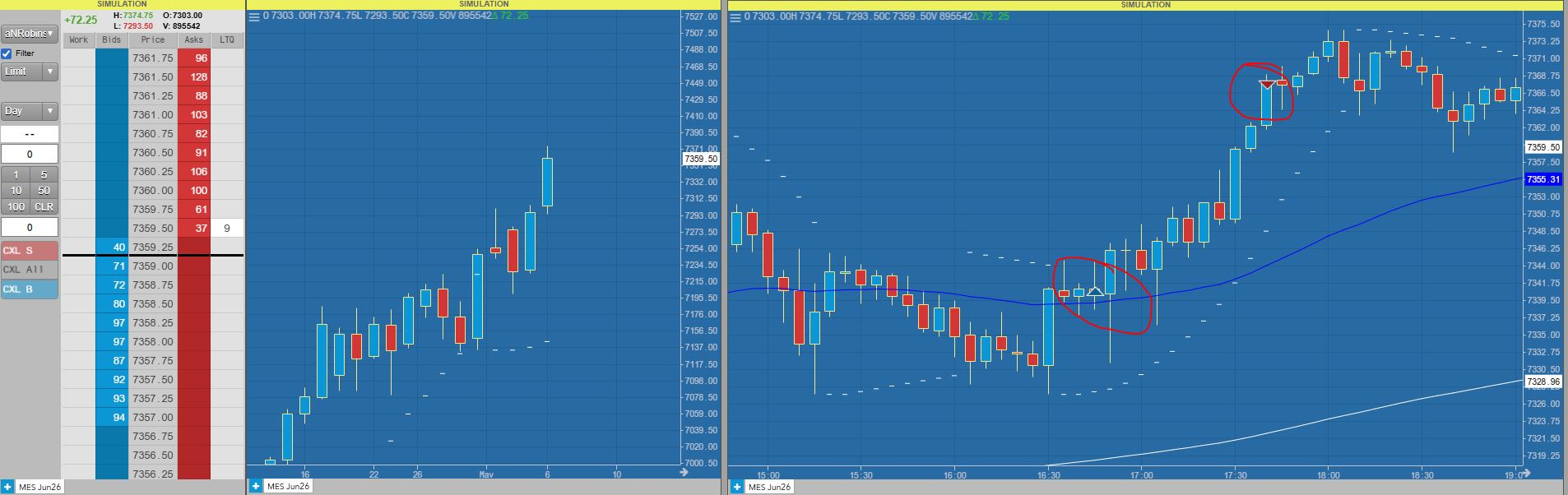
Below is the complete system — the daily filter, the five minute setup, each of the four tools explained, the exact five-step entry checklist, how to size across the MES and ES, and two real trade examples from this week with every decision point shown.
This is a full Premium letter. Everything below is for subscribers.
🔒 [Upgrade to Premium — chatroom, EMA scanner, short squeeze watchlist and RB Journal access]
The shift that changes everything
Here is the reframe.
The five minute chart without the daily context is noise.
The five minute chart with the daily context is signal.
Same chart. Same candles. Same price action. Completely different outcome depending on which version you are seeing.
